Walk the sand path out toward Gould's Inlet on any morning this month and you'll likely pass a stretch of dune wrapped in survey tape with a hand-lettered stake driven into the sand. That part of summer on St. Simons hasn't changed in years. What has changed is the scoreboard everywhere else on the Georgia coast, and the fact that this island keeps landing on the wrong side of it.
Georgia's barrier islands just closed out the best loggerhead nesting season state biologists have recorded since 1989. As of early August, the coastwide nest count had climbed past 4,110, breaking the previous record of 4,071 set in 2022, according to the Georgia Department of Natural Resources' wildlife blog. That's not a one-year spike. Loggerhead numbers along the coast have been climbing roughly 4 percent a year since the early 1990s, a slow climb back from a low point of just 358 nests statewide in 2004.
St. Simons is the most populated barrier island in the state, and it's also the one everyone in the sea turtle world points to as the exception. In 2025, the entire island produced a single nest. Glynn County as a whole logged 307 nests that same year, and most of that total belonged to Jekyll Island, a few miles south, where the beaches stay far darker after sunset. If you've ever wondered why turtle patrol trucks seem busier on Jekyll than on your own stretch of sand, that's the reason in one sentence: it isn't luck, it's lighting.
Why The Island's Own Porches Are The Problem
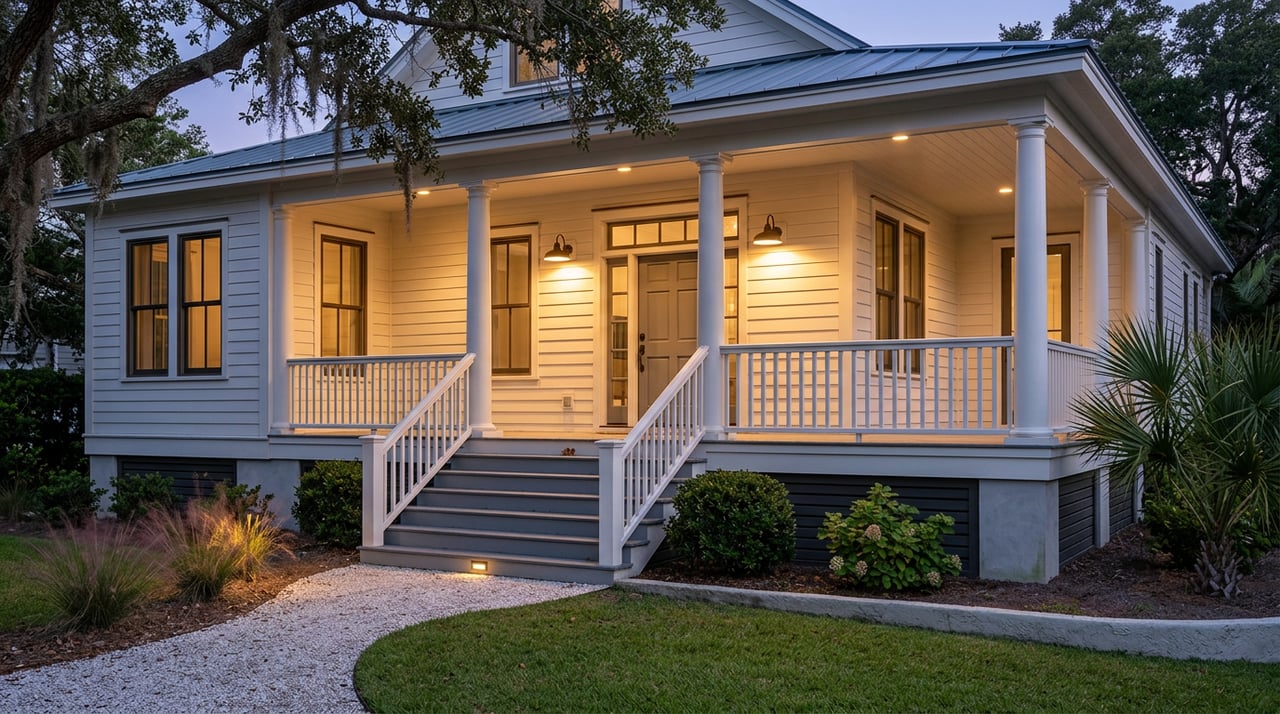
Sea turtles have navigated this coast for millions of years using a system that works perfectly on an undeveloped beach and badly on a developed one. Hatchlings crawl toward the brightest, lowest point on the horizon. On a dark beach, that's moonlight bouncing off the water. On St. Simons, it's often a porch light, a pool light, or a streetlamp pulling them the wrong direction, away from the surf and into dune grass, parking lots, or worse.
Catherine Ridley, who directs the St. Simons Island Sea Turtle Project and serves as vice president of communications and education for the nonprofit One Hundred Miles, has been tracking exactly how bad this gets. Nearby Sea Island runs a misorientation rate roughly double the statewide average, with researchers documenting between 22 and 23 percent of nests showing significant misorientation in recent years. That means more than one in five nests on that stretch of coast loses a meaningful share of hatchlings before they ever reach the ocean.
Ridley has pointed specifically to Gould's Inlet, where nests sit within view of vacation rental porches and pool decks that often stay lit well past midnight during peak season. Her frustration isn't abstract. Speaking about the gap between the rules on paper and what actually happens on a given night, she put it plainly:
"We've lost an entire nest worth of turtles that we've worked all season to protect."
It isn't only porches. Environmental advocates have also flagged the high-mast lighting at the Buc-ee's interchange off I-95, maintained by Glynn County but owned by the state Department of Transportation, as visible from up to 12 miles away and capable of pulling hatchlings on Little St. Simons Island inland instead of toward the water.
The Zoning Draft That Undercut The Fix
The county has known about the lighting problem for a while. In January 2026, Glynn County staff held public town halls on St. Simons to walk residents through proposed updates to the beachfront lighting ordinance, the first real revision since the rule was first written. As one advocate put it during those meetings, the existing ordinance has been on the books since 1984, back when a lot of local hairstyles and technology looked a lot different.
The revised draft would have required more of what biologists call turtle-friendly lighting: long-wavelength amber or red bulbs, fixtures shielded from the beach, nothing pointed upward toward the sky. Then, between December 2025 and February 2026, a second draft quietly stripped most of that language back out. The rewrite came out of a zoning committee made up largely of real estate developers and architects, and it landed on the Island Planning Commission's desk with the turtle-specific rules gutted.
Not everyone on that commission sees the walk-back as a problem. Courtlyn Cook, who sits on the Island Planning Commission and chairs the Glynn County GOP, has argued the stricter lighting requirements go too far for oceanfront property owners, particularly families planning future renovations who would then be bound by amber and red bulb requirements they didn't choose. Her position centers on property rights and the fact that oceanfront owners already carry some of the highest property tax bills in the county.
Ridley's counterargument is that the science isn't really in dispute. Turtle populations along the whole Southeast are growing, which is exactly why the gap between St. Simons and its neighbors stands out so clearly. As of that March reporting, the stripped-down draft was headed toward a commissioner vote later in the spring. Anyone who wants to know exactly where that language landed since then can check the county's current commission meeting records directly, since the final wording will decide how many more seasons look like 2025 on this particular stretch of beach.
What Actually Helps, Regardless Of How The Vote Lands
Whatever the ordinance ends up saying, there are things residents and renters can do on their own porch tonight that don't require waiting on a commission vote:
- Turn off decorative lights, uplighting, and string lights facing the beach from May through October
- Swap exterior bulbs near the dune line to amber or red, which turtles are far less sensitive to than white light
- Close blinds or curtains on beach-facing windows after dark, since interior lighting is often brighter than anything outside
- Skip the flashlight and the phone light on night beach walks, or use a red-bulb flashlight if you need one
- Leave any nest markers, stakes, and tape alone, and report a disoriented hatchling rather than trying to guide it yourself
None of this is complicated. It's also the difference between a nest that makes it and one that doesn't, according to the people who spend their summer nights counting both.
A Record Year, Still Waiting On This Island
There's something worth sitting with in the fact that 2026 is shaping up as the best season Georgia's loggerheads have had in nearly four decades, and St. Simons is still working to catch up to a recovery happening almost everywhere around it. The turtles are doing their part. The open question, still sitting in front of a zoning commission, is whether the island will do its part back.
If you're the kind of resident who already checks the tape at Gould's Inlet before your morning walk, you already know how this story ends up mattering more than a single line item in a zoning code. It's your porch light, your pool light, your beach house that's part of the count next season.
Chuck Hudson and the team at A36 Group spend as much time tracking what's actually happening on St. Simons as they do tracking listings, because the two are never as separate as they look. If you want more dispatches like this one, along with the market side of island life when you're ready for it, the Saint Simons neighborhood page is a good place to start, and Chuck's team is always glad to talk, whether that means real estate or just comparing notes on this year's nest count.