Dreaming about a few quiet acres near Darien sounds simple enough, until you realize the land has to work for the life you want to build. If you are picturing a garden, a workshop, a few animals, or a future barn, you need more than a pretty parcel and a rough idea of acreage. You need to know how zoning, permits, utilities, flood risk, and private restrictions all fit together before you buy. Let’s dive in.
Start With Jurisdiction
One of the first things to confirm is whether the property sits in unincorporated McIntosh County or inside Darien city limits. That single detail affects which rules, permit forms, and utility processes apply to your future homestead.
In unincorporated McIntosh County, zoning and building rules are handled through the county code and county building and zoning office. Inside Darien, the city has its own building permit, land-disturbance, zoning amendment, and water and sewer service processes. If you skip this step early, you can lose time chasing the wrong requirements.
Check Zoning Before Acreage
A small homestead near Darien is not just about how much land you buy. It is about what the zoning district allows you to do with that land.
McIntosh County includes districts such as A-F general agriculture-forestry and A-R residential agriculture. For many buyers with a homestead plan, A-R is often the first district to review because it is intended primarily for small farms with residences and other limited compatible uses.
What A-R Means for Buyers
The A-R district requires:
- A minimum lot area of 3 acres
- A minimum lot width of 150 feet
- Minimum setbacks of 30 feet front, 25 feet side, and 25 feet rear
If you want room for a home, garden, accessory building, and some flexibility for future use, these standards matter right away. A parcel that looks large enough online may still fall short if the width, setbacks, or recorded lot status create limits.
How A-F Differs
The A-F district is aimed more toward agricultural and forestry production. The county code notes that utilities other than electricity and telephone should be provided by the land user, which signals a more self-supplied, production-oriented setting rather than a lightly rural homesite.
That does not make A-F wrong for every buyer. It does mean you should approach it as true agricultural or forestry land first, not assume it will function like a simple residential homestead tract.
Understand What the County Actually Allows
A common mistake with rural land is assuming you can do anything as long as you have enough acreage. McIntosh County’s ordinance is more specific than that.
The code says no building or land use is allowed unless it is specifically permitted in the district or approved through a special use, variance, or text-amendment process. That means your plan needs to match the zoning as written, or you may need extra approvals before the property can work the way you want.
This matters even more for undersized or unusual parcels. If a lot is smaller than the district minimum, it generally cannot receive a use permit unless it was legally recorded before the ordinance. In plain terms, a bargain lot can become expensive fast if it cannot be used the way you expected.
Plan Outbuildings Early
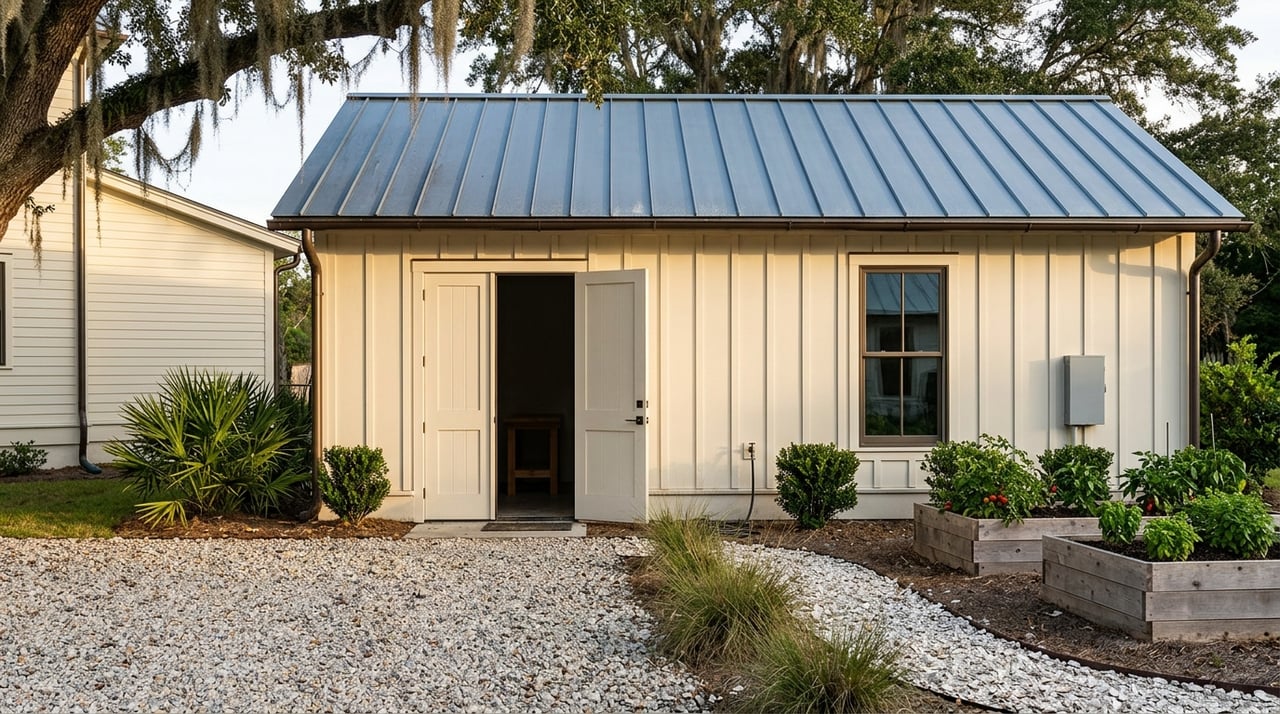
If your homestead vision includes a shed, greenhouse, barn, or workshop, do not leave those questions for later. Accessory uses and structures should be part of your due diligence before you make an offer.
McIntosh County’s ordinance allows several homestead-style accessory uses tied to dwellings, including:
- Sheds
- Private kennels
- Noncommercial flower and vegetable gardens
- Greenhouses
That is good news for buyers who want a practical setup. Still, permitted use does not mean unlimited placement.
Setbacks Still Apply
Accessory structures must still meet the district’s setback and yard requirements. So even if the county allows the use itself, the building must still fit the lot correctly.
This is why site layout matters. A workshop or barn that looks fine on a listing photo may be hard to place once you account for setbacks, well spacing, septic layout, and driveway access.
Barns and Workshops Need the Right Permit Path
McIntosh County lists an accessory building permit for these types of structures. The building office also notes that pole-barn-style noncontinuous footers require a design professional’s signature.
That one detail can affect both budget and timeline. If your goal is to add a barn or workshop soon after closing, it helps to know upfront whether your plan will need extra design work or review.
Think Carefully About Animals
Many buyers looking for a small homestead want space for hobby animals or poultry. Near Darien, that means checking both zoning language and the practical impact on the site.
McIntosh County includes setback language for livestock and poultry, and the nuisance chapter treats prolonged animal noise as a nuisance. So the question is not only whether you can keep animals, but whether your lot gives you enough room to place shelters and coops in a way that fits the rules and respects nearby properties.
For buyers with this goal, larger and better-shaped parcels often provide more flexibility than smaller tracts. That is one reason lot layout can matter just as much as total acreage.
Do Not Ignore Private Restrictions
Even when zoning looks favorable, private deed restrictions and recorded covenants can add another layer of limits. These restrictions can run with the land and may control things like fences, building materials, accessory structures, or certain uses.
In practice, that means a parcel could be zoned for a workshop or small animal use but still be limited by deed language or an HOA-style covenant. This is one of the easiest ways buyers get surprised, especially with rural-looking subdivisions or older recorded communities.
Utilities and Septic Can Make or Break a Property
Raw land often looks appealing because of the price or the setting. But the real question is whether the parcel can support your homesite in a practical, legal, and timely way.
In McIntosh County, septic systems and individual water supply systems may not be operated without valid board-of-health approval. The county also provides a well permit application, which makes water access part of the approval path rather than a simple afterthought.
Well Setbacks Matter
Georgia DPH says private wells must be installed by a licensed water well contractor. The well also must be set back at least:
- 10 feet from a sewer line
- 50 feet from a septic tank
- 100 feet from a septic absorption field
- 150 feet from a cesspool or seepage pit
- 100 feet from an animal or fowl enclosure
These spacing rules affect how your homesite can be arranged. If you want a house, septic, a well, animals, and outbuildings, the site plan has to work as a whole.
Flood Review Is Essential Near Darien
Near Darien, flood risk should be one of your first screens, not something you review at the end. McIntosh County’s flood ordinance requires a development permit before development activity in unincorporated areas, and it adds special standards in flood hazard areas, including coastal high-hazard V-zones.
Those standards can affect design, elevation, cost, and buildability. A scenic tract near marsh or water may still work well, but only if you understand the floodplain requirements before you commit.
This is one reason improved parcels can sometimes save time. If a site already has some development history, utility work, or known code path, you may avoid part of the uncertainty that comes with raw coastal land.
Raw Land vs. Improved Parcels
When you compare options near Darien, it helps to separate raw land from improved parcels. They can lead to very different timelines.
Improved parcels usually move faster because some combination of driveway access, utilities, septic, well, or prior code history is already in place. Raw land typically requires more sequencing, including zoning verification, septic and well approvals, flood review, permit issuance, plan review, and then construction.
Why Raw Land Often Takes Longer
McIntosh County notes that building permits must be renewed if construction has not begun within six months. Temporary power is only available with a valid building or special-use permit, and occupancy permits are not issued until the project complies with applicable electrical, plumbing, and mechanical codes.
The county also says single-family plans must be professionally drawn or accompanied by a foundation, elevation, and framing plan, though internet plans are acceptable. So even before building starts, the paperwork and plan review process can be more involved than many buyers expect.
Local Planning Support Helps
If you are serious about a small homestead, local guidance matters because the moving parts overlap. You are not just buying land. You are testing whether that land can support your specific plan.
McIntosh County’s building and zoning office maintains separate applications for new homes, accessory buildings, wells, rezoning, special use, and variances. UGA Extension’s McIntosh County office can also help with practical agriculture and homeowner questions, including fruit and vegetable production, pest control, tree care, and other land-use topics.
A Smart Homestead Search Strategy
If you want to buy near Darien with confidence, keep your search focused on use first and appearance second. A beautiful tract is only a good fit if the rules, layout, and utility path support the way you actually want to live.
A practical way to narrow your options is to ask these questions early:
- Is the property in unincorporated McIntosh County or inside Darien city limits?
- What zoning district applies?
- Does the parcel meet minimum lot size and width rules?
- Are accessory buildings allowed for your intended use?
- Is there enough room for setbacks, septic, well spacing, and animal areas?
- Is the parcel affected by flood hazard requirements?
- Are there recorded covenants or deed restrictions?
When you answer those questions before you fall in love with a parcel, you protect both your timeline and your budget.
If you are exploring rural acreage near Darien and want a clear, no-surprises process, Chuck Hudson can help you sort through zoning, site fit, and the local details that matter before you buy.
FAQs
What zoning should you look for on a small homestead near Darien?
- In unincorporated McIntosh County, A-R residential agriculture is often the first district buyers review because it is intended for small farms with residences and requires a 3-acre minimum lot area.
Can you build a barn or workshop on land near Darien, GA?
- Yes, if the zoning allows the use and you follow the county’s accessory building permit path, setback rules, and any applicable code or design requirements.
Can you keep animals on a small homestead in McIntosh County?
- McIntosh County includes livestock and poultry setback language, and prolonged animal noise can be treated as a nuisance, so your lot layout and use plan matter.
What can delay building on raw land near Darien?
- The biggest delays often come from zoning verification, septic and well approvals, floodplain review, permit sequencing, and plan review.
Do deed restrictions matter on rural acreage near Darien?
- Yes, recorded covenants and deed restrictions can add private limits on buildings, materials, fences, or land use even when zoning would otherwise allow your plan.
Why does flood risk matter for a homestead near Darien, GA?
- McIntosh County requires a development permit for development activity in unincorporated areas and applies added standards in flood hazard areas, which can affect design, elevation, and cost.