What if the very features you love about Savannah’s charm also make your home cooler, drier, and more storm ready? If you are moving to Chatham County or buying for the first time, it helps to know why Lowcountry homes look and live the way they do. In this guide, you will see the key architectural elements that fit our heat, humidity, and coastal weather, plus how to match neighborhoods and styles to your goals. You will finish with a clear checklist and trusted local resources. Let’s dive in.
Why Lowcountry design works here
Savannah sits in a humid coastal climate with hot summers, frequent heavy rain, and seasonal storm risk. Homes that excel here manage heat, moisture, wind, and occasional flooding. The Lowcountry style evolved to solve these problems while creating beautiful outdoor living spaces. Below are the features you will see most often and how to evaluate them as a buyer.
Raised foundations
Raised foundations lift the first floor above grade using piers or engineered systems. This helps reduce flood and storm‑surge risk and allows the area below to dry after heavy rain. It also discourages pests and keeps mechanicals safer if they are elevated properly.
Buyer checklist:
- Confirm FEMA flood zone, Base Flood Elevation, and the home’s lowest floor elevation.
- Inspect piers, sills, skirting, and access panels for rot and pests.
- Verify that HVAC and electrical panels are elevated or protected.
Piazzas and wide porches
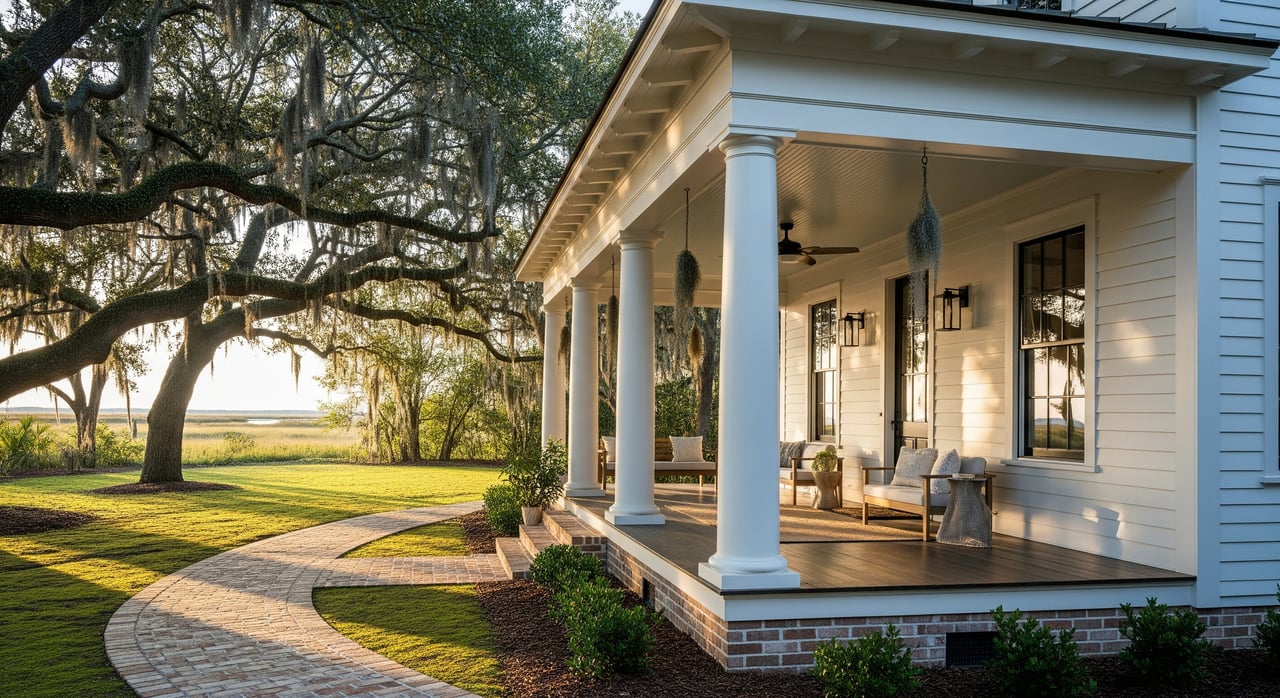
Deep, shaded porches, often called piazzas, are a hallmark of Savannah and nearby coastal towns. They block strong sun, shed rain, and promote cross‑ventilation when doors and windows are open. These spaces also extend your living area in a climate where outdoor time is a big part of daily life.
Buyer checklist:
- Check porch decking, columns, and railings for rot and fastener corrosion.
- Look for roof and flashing details that move water away from walls.
- Note orientation. West and south porches help tame late‑day sun.
Tabby and coastal masonry
Tabby is a historic coastal concrete made with lime, sand, water, and crushed oyster shell. You will see it in older foundations, walls, and site features across the region. True tabby today is mostly preserved rather than newly built, and repairs typically call for specialists.
Buyer checklist:
- If a property includes tabby, plan for specialized inspections.
- Coordinate early with local preservation staff for exterior work in historic districts.
Metal roofs and weather performance
Standing‑seam and other metal roofs are popular for their wind resistance, long service life, and ability to shed heavy rain quickly. Aluminum performs well in salt air and modern coatings can reflect heat to ease attic loads. Upfront cost is often higher than asphalt shingles, but lifespan can be much longer when installed correctly.
Buyer checklist:
- Confirm age, attachment method, flashing, and fastener type.
- Ask about coatings and maintenance history.
- Review attic ventilation and moisture control.
For more on roofing performance, see guidance from the Metal Roofing Alliance and the National Roofing Contractors Association.
Siding and trim materials
Traditional clapboard and cedar shingles look great and breathe, but they need routine paint and repair in a humid, salty environment. Many newer homes use fiber cement and engineered products that mimic historic profiles with lower maintenance. All exterior materials need periodic inspection in our climate.
Buyer checklist:
- Look closely at paint, caulk, and water‑table trim.
- Check window and door flashing for proper water management.
Layout for air and light
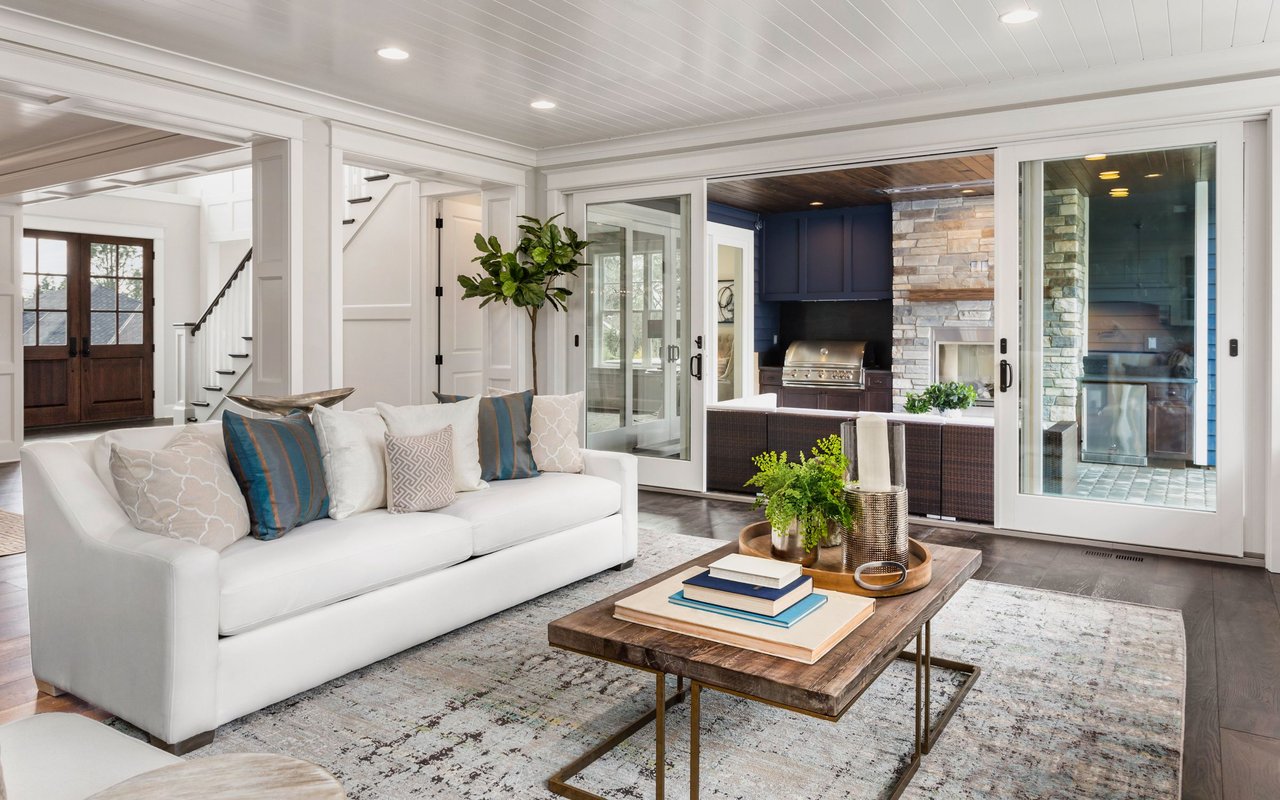
Tall ceilings, transoms, operable shutters, and aligned doors were designed to move air before air‑conditioning. Deep overhangs and shutters also shield windows from direct sun and wind‑driven rain. These features add comfort and character, but older systems may need updating to stay energy efficient.
Buyer checklist:
- Confirm insulation levels and duct condition.
- Make sure HVAC is properly sized for the home’s volume.
Where to find these styles in Chatham County
Savannah Historic District and Victorian District
You will see rowhouses, townhomes, raised stoops, deep porches, and classic brick and wood cladding. These areas offer walkability and rich architectural detail. Expect historic‑district review for exterior changes and plan for older system upgrades.
If you are planning exterior work, review the City’s design rules with the Savannah Historic Preservation Office and the Historic Savannah Foundation.
Isle of Hope, Georgetown, and Wilmington Island
Waterfront cottages and elevated homes with wide porches are common, along with larger lots and marsh views. Boaters and buyers seeking more privacy often start here. Pay close attention to flood zones and insurance details for coastal parcels.
Ardsley Park, Chatham Crescent, and Midtown
Early 20th‑century bungalows and revival styles line tree‑shaded streets. You get charm and porches with less direct tidal exposure than the barrier islands. Maintenance still matters in our humid climate, especially for wood and roofing.
Tybee Island and other barrier communities
Think beach cottages on pilings, hurricane ties, metal roofs, and porches aimed at sea breezes. These homes suit buyers who want a beach lifestyle or potential rental income. Expect stricter wind codes, higher insurance costs, and more salt‑air maintenance.
New construction in Skidaway Island and Southside
Many new builds borrow Lowcountry elements like elevated living, big porches, and optional metal roofs, paired with modern systems and materials. This is a good fit if you want the look with fewer surprises. Always verify actual elevation and builder warranties.
What to evaluate before you buy
Flood risk and elevation certificates
Parts of Savannah fall within FEMA Special Flood Hazard Areas. Your insurance rate and lender requirements depend on the flood zone and how the home’s elevation compares to the Base Flood Elevation. Use the FEMA Flood Map Service Center to review maps and request the seller’s Elevation Certificate when available.
Moisture, ventilation, and HVAC
Humidity is constant in the Lowcountry. Crawlspace ventilation, attic ventilation, vapor barriers, and correctly sized HVAC help prevent moisture and mold problems. For background on moisture and health, review guidance from the U.S. EPA on mold and the CDC’s mold resources.
Historic rules and permits
Exterior changes to porches, roofs, windows, and siding often require approval in designated districts. Before planning a renovation, contact the City of Savannah Historic Preservation Office to understand review steps and timelines.
Inspections that matter here
In addition to a standard home inspection, ask your team to focus on coastal specifics.
Key inspection checklist:
- Confirm FEMA flood zone and obtain the Elevation Certificate.
- Structural review of piers, sill beams, and crawlspace conditions.
- Roofing review for material, age, attachment, flashing, and corrosion.
- Porch and column inspection for rot and secure connections.
- Moisture review of attic and crawlspace ventilation and insulation levels.
- Termite and wood‑borer inspection and treatment history.
- Verify elevation of HVAC, water heater, and electrical panels relative to BFE.
- Historic‑district status and records of prior approvals or permits.
Quick buyer matchups
- Love historic fabric and walkable blocks: Consider the Historic and Victorian districts, and plan for preservation rules and maintenance.
- Want water access and wide porches: Explore Isle of Hope, Georgetown, and Wilmington Island, with a focus on elevation and insurance.
- Prefer classic neighborhoods and yard space: Look at Ardsley Park, Chatham Crescent, and Midtown for charm with less direct tidal exposure.
- Crave a beach lifestyle or seasonal rental options: Tybee Island and nearby barrier communities fit, with higher wind and salt‑air demands.
- Want Lowcountry style with modern systems: Newer homes in Skidaway Island and Southside often blend aesthetics with efficiency.
Your next step
If you want a home that looks timeless and performs in Savannah’s climate, focus on elevation, porches, roofing, and moisture control. Pair that with neighborhood fit and a plan for inspections and insurance. When you are ready to move, you deserve a disciplined, no‑surprises process guided by a local advisor who knows this market block by block.
Have questions or want a walkthrough tailored to your search window, VA options, or investment goals? Connect with Charles Hudson for a one‑on‑one consult, local comps, and a clear plan from first tour to closing.
FAQs
Do piazzas actually help cool a Savannah home?
- Yes. Deep porches provide shade, reduce solar heat on walls and windows, and promote cross‑ventilation when paired with open doors and windows.
Is a metal roof worth it near the coast?
- Often, yes. Properly installed metal roofs offer strong wind resistance, long service life, and fast rain shedding. Material and coatings matter for salt‑air durability.
Do raised foundations create more maintenance than slabs?
- They require periodic checks of piers, skirting, and under‑house utilities, but they reduce flood damage risk and allow faster drying after storms.
Can I replace windows or porch elements in a historic district?
- Possibly, but many exterior changes need approval. Contact the City of Savannah Historic Preservation Office early to understand requirements.
How important is an Elevation Certificate for Savannah homes?
- Very important. It informs your true flood risk and affects flood insurance costs and lender requirements, especially in FEMA‑mapped flood zones.