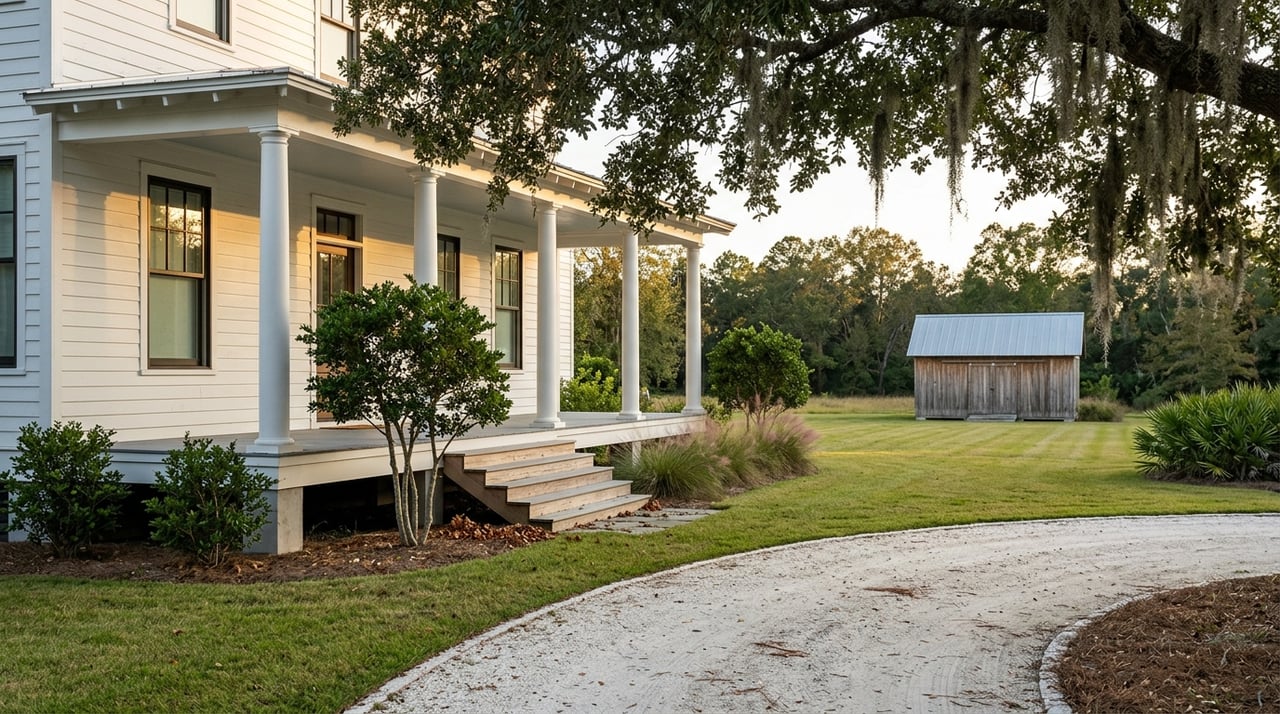
Dreaming about a few acres near Darien with marsh views, room for animals, or space to build your own place? It is easy to picture the lifestyle first and the paperwork second. But in coastal McIntosh County, the details behind flood zones, wetlands, zoning, septic, wells, and access can shape what you can actually do with a property. This guide will help you sort through the big questions before you buy so you can move forward with more confidence. Let’s dive in.
Why Darien Acreage Feels Different
Buying rural land near Darien is not the same as buying a suburban lot. The coastal setting plays a major role in how land can be used, improved, and insured.
According to McIntosh County flood safety information, the county’s low-lying coastal plains are susceptible to flooding from rivers and canals, and hurricane flooding is also a factor because multiple sounds intersect the county. That means a beautiful marsh-facing tract may come with extra due diligence that you would not expect on inland property.
Darien’s water-oriented lifestyle is a real draw, and the city maintains public docks and boat launches on the Darien River and Champney River. For many buyers, that access is part of the appeal. At the same time, marsh views and waterfront proximity often come with flood and wetland sensitivity that needs to be checked early.
Start With Zoning First
If you are looking at mini-farms, timber tracts, or homesites with elbow room, zoning should be one of your first filters. In McIntosh County, lot size and intended use vary by district.
The county’s zoning ordinance says the A-F district is intended for field crops, livestock, poultry, and forestry. It requires at least 5 acres and 300 feet of frontage, and the ordinance notes that utilities other than electricity and telephone are generally expected to be provided by the land user rather than through costly public extension.
The same ordinance says the A-R district is designed for small farms with residences and other limited compatible uses. It requires a minimum lot area of 3 acres and 150 feet of frontage. Commercial, industrial, and small-lot residential uses are discouraged in that district.
For comparison, the county’s R-1 district requires 1 acre per dwelling unit, and smaller lots in that district must be served by public or community water or sewer approved by the county health department and-or EPD. That matters if you are comparing in-town or near-town parcels with more rural tracts.
Marsh Views Are Not the Same as Buildable Land
This is one of the biggest misconceptions with coastal acreage. A parcel may look large on paper, but not every part of it should be treated like ordinary usable land.
McIntosh County’s zoning ordinance places all saltwater marsh areas in the Conservation Preservation (CP) district, with marsh boundaries tied to the National Wetlands Inventory and Georgia DNR. In plain terms, if part of a tract includes marsh, you should not assume all of that acreage is buildable or suitable for typical residential improvements.
That is why parcel maps, surveys, and county-level review matter so much. When you are buying for views, privacy, or recreation, the value may still be there. You just want a clear picture of which parts of the property can support your actual plan.
City Services Vs. Rural Setup
Where the property sits can change the entire buying process. In-town Darien properties are more likely to connect to city-managed systems, while rural acreage often involves more county review and private infrastructure.
The City of Darien’s Public Works Department manages the city water and wastewater system, streets, and the wastewater treatment plant. The city also lists permits for subdivision, building, trailer, demolition, and land disturbance.
On more rural tracts, you are more likely to deal with private septic, private wells, driveway approvals, and other county-level requirements. That does not make rural acreage a bad option. It simply means you need to evaluate utilities and permits before you get too far down the road.
Check Access, Septic, and Wells Early
If you only remember one thing, remember this: do not treat acreage due diligence like a standard house purchase. Access, wastewater, and water supply can make or break a deal.
McIntosh County’s new residential construction checklist requires septic permit approval, a county water tap-in receipt, road department approval for the driveway, an approved plat, and an elevation certificate if the lot is in a flood zone. That sequence shows how many moving parts can affect whether a homesite is ready to build.
The county’s rezoning application guidance also says buyers should contact the county health department before filing to determine whether the soil can support septic or other waste treatment equipment and whether wells can be drilled on the property. It also notes that subdivision development within 200 feet of county water must connect to that system unless a waiver is obtained.
Georgia DPH says a private well should be kept away from flood-prone areas where possible, must be at least 50 feet from a septic tank and 100 feet from a septic absorption field, and must be installed by a licensed well contractor who notifies the county health department before drilling. The state also recommends annual bacterial testing.
A practical due diligence checklist
Before closing on acreage near Darien, make sure you verify:
- Zoning district and minimum lot standards
- Whether marsh or wetland areas affect usable land
- Legal access and driveway approval needs
- Septic feasibility through the county health process
- Whether a well can be drilled, or county water is available nearby
- Flood zone status and any elevation certificate requirements
- Whether the property will need public utility connection under county rules
Flood Risk Should Be a Front-End Conversation
In coastal Georgia, flood risk is not something to check after you go under contract. It should be part of your initial screening.
McIntosh County states that natural floodplains include marsh areas and low-lying areas along canals, and that both river-related flooding and hurricane impacts can affect the area. The county and city also participate in the National Flood Insurance Program, and the county clearly notes that standard homeowners insurance does not cover flood damage.
If you are financing a structure in a Special Flood Hazard Area with a federally backed loan, flood insurance is required, according to the county’s flood safety page. Buyers can review flood information through the Georgia Flood Map website and FEMA Flood Map Service Center.
There is another layer here for buyers considering fixer properties or future additions. McIntosh County’s flood ordinance says substantial improvements that exceed 50 percent of a structure’s fair market value can trigger a requirement to bring the home up to current flood standards.
Mini-Farm Dreams Need Real-World Planning
The good news is that small-scale agriculture and land-based uses are part of the local landscape. According to UGA Extension, McIntosh County’s agriculture and natural resources work supports local gardeners and beekeepers, and the county has more than $22 million in farm-gate value with blueberries, timber, and ecotourism among its top commodities.
That does not mean every acreage listing is ready for every rural use. Your ideal setup might include a homesite, a garden, a few animals, managed timber, or hobby-scale agriculture. The best fit depends on zoning, lot dimensions, utilities, and how much of the tract is truly usable.
If you are buying with a mini-farm mindset, start by matching the land to the intended use instead of assuming the acreage count tells the whole story. A 5-acre tract with the right zoning and upland area may work better than a larger parcel with significant marsh or flood constraints.
Understand Property Taxes Separately
Acreage buyers sometimes assume rural land will automatically be taxed in the most favorable way. That is not always the case.
The Georgia Department of Revenue says bona fide agricultural property may qualify for preferential agricultural or conservation use assessment. Agricultural or timber land owners should file for current use assessment with the county board of tax assessors by the ad valorem filing deadline, and the qualifying use must be maintained for 10 years.
That means tax treatment is a separate question from list price or lot size. If you are considering a hobby-farm or timber property, verify current-use status, any covenant obligations, and whether the land use aligns with county and state requirements before you make assumptions about carrying costs.
What Smart Buyers Do Before Making an Offer
The buyers who feel best about acreage purchases usually take a slower, more structured approach upfront. That is especially true around Darien, where coastal conditions can affect nearly every part of the decision.
A smart plan usually includes:
- Reviewing zoning and frontage requirements.
- Checking flood maps and asking about elevation records if applicable.
- Confirming whether the tract includes marsh or other constrained areas.
- Investigating septic, well, or county water options.
- Verifying access, driveway approval, and plat status.
- Evaluating whether your intended use matches the land.
That process may sound detailed, but it helps you avoid expensive surprises later. It is much easier to spot a great fit when you know what questions to ask.
If you are weighing acreage near Darien and want a grounded, no-drama look at what fits your goals, Chuck Hudson can help you compare properties, sort through the due diligence questions, and move forward with a clear plan.
FAQs
What should you check before buying rural acreage near Darien?
- Check zoning, flood zone status, legal access, septic feasibility, well or water availability, driveway approval needs, and whether marsh areas affect usable land.
Can you build on marsh-view land in McIntosh County?
- Not always. McIntosh County places saltwater marsh areas in the Conservation Preservation district, so you should not assume all acreage on a marshy tract is buildable.
Does rural land near Darien usually have public water and sewer?
- Not necessarily. In-town Darien properties are more likely to connect to city-managed systems, while rural tracts often rely on county approvals and private systems such as wells and septic.
Do you need flood insurance for acreage property near Darien?
- Standard homeowners insurance does not cover flood damage, and federally backed loans require flood insurance for structures in Special Flood Hazard Areas.
Can mini-farm or timber land in McIntosh County get special tax treatment?
- It may qualify for preferential agricultural or conservation use assessment if it meets Georgia requirements, but you should verify eligibility, filing deadlines, and any 10-year covenant obligations.